
How to Clean a Dishwasher
Tue Mar 03 2026
- Tips & How To's
- Kitchen Appliances
Your dishwasher works hard every day to clean plates, glasses, cookware, and utensils, but when was the last time you cleaned your dishwasher?
Many homeowners assume that because a dishwasher uses soap and hot water, it stays clean on its own. In reality, food particles, grease, detergent residue, and hard water minerals can build up over time. This buildup can cause unpleasant odors, cloudy dishes, and reduced cleaning performance.
According to the appliance experts at Van Vreede’s, regular dishwasher maintenance is one of the simplest ways homeowners in Appleton, Green Bay, and Oshkosh, WI can extend the life of their appliance and keep it performing like new.
In this guide, we’ll walk you through how to clean a dishwasher properly, how often to do it, and when it might be time to consider an upgrade.

Why Cleaning Your Dishwasher Matters
Even though your dishwasher handles dirty dishes, it can accumulate:
-
Food debris in the filter
-
Grease along interior walls
-
Hard water deposits
-
Mold or mildew around seals
-
Clogged spray arms
If left untreated, these issues can lead to:
-
Foul odors
-
Reduced water pressure
-
Poor wash performance
-
Increased energy usage
-
Premature wear on internal components
Routine cleaning keeps your dishwasher efficient and helps prevent costly repairs.
How Often Should You Clean Your Dishwasher?
Van Vreede’s appliance specialists recommend:
-
Light use households: Every 1-2 months
-
Frequent use households: Monthly
-
Hard water areas: Monthly, with mineral removal focus
Wisconsin’s hard water conditions make regular maintenance especially important for homeowners in Green Bay and surrounding areas.
Step-by-Step: How to Clean a Dishwasher
Follow these steps for a thorough cleaning.
Step 1: Clean the Dishwasher Filter
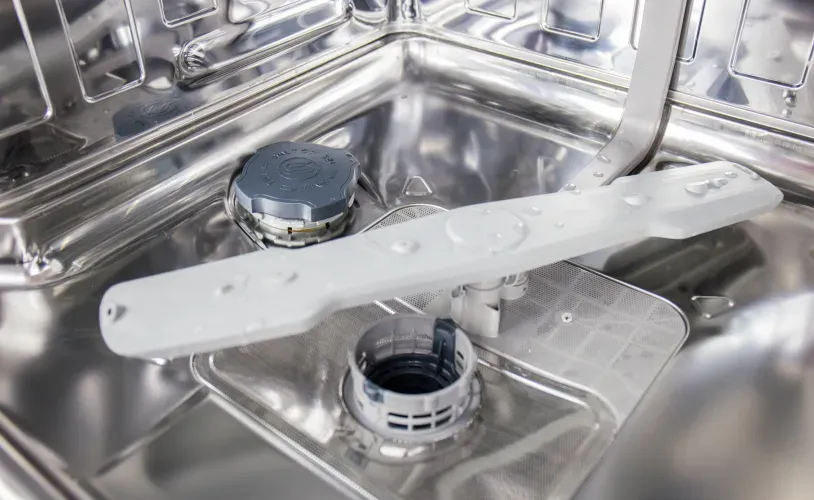
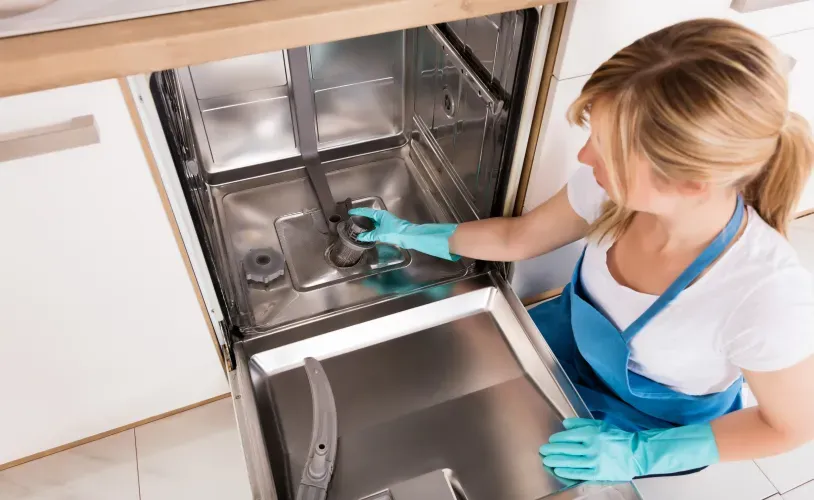
Most modern dishwashers have a removable filter located at the bottom of the tub.
How to clean it:
-
Remove the bottom rack.
-
Twist and lift the filter out.
-
Rinse under warm water.
-
Use a soft brush to remove debris.
-
Reinstall securely.
A clogged filter is one of the most common causes of odor and poor performance.
Step 2: Inspect and Clear Spray Arms
Spray arms distribute water during the wash cycle. If clogged, dishes may not clean properly.
What to check:
-
Food particles in spray holes
-
Mineral buildup blocking water flow
Use a toothpick or small brush to clear debris and rinse thoroughly.
Step 3: Wipe the Door Gasket and Seals
Rubber seals around the dishwasher door can trap moisture and debris.
Use:
-
Warm water
-
Mild dish soap
-
A microfiber cloth
This helps prevent mold and mildew buildup.
Step 4: Run a Vinegar Cleaning Cycle
White vinegar naturally breaks down grease and mineral buildup.
How to do it:
-
Place a dishwasher-safe bowl with 1–2 cups of white vinegar on the top rack.
-
Run a hot water cycle.
-
Do not add detergent.
This step deodorizes and removes residue.
Step 5: Use Baking Soda for Odor Control
After the vinegar cycle:
-
Sprinkle one cup of baking soda across the bottom of the dishwasher.
-
Run a short hot cycle.
This helps remove lingering odors and brighten the interior.
Optional: Use a Dishwasher Cleaner Tablet
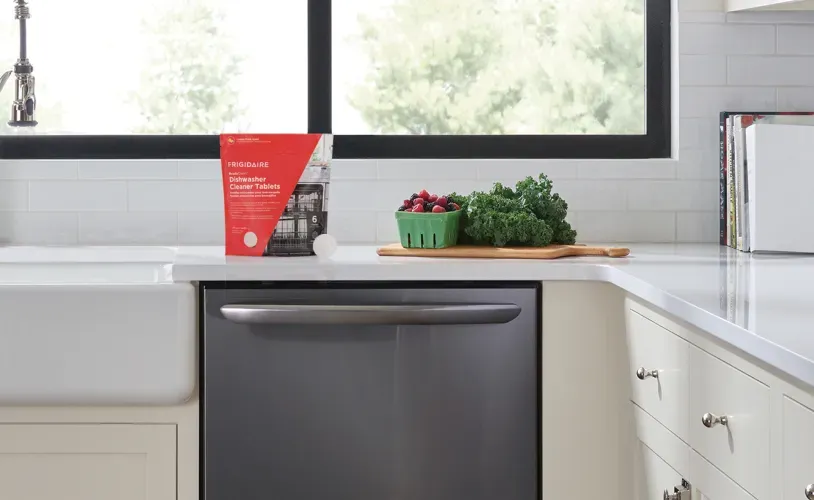
If mineral buildup is heavy, a manufacturer-approved dishwasher cleaner can help dissolve hard water deposits more effectively than DIY solutions.
Common Dishwasher Cleaning Mistakes
Using Bleach in Stainless Steel Interiors
Bleach can damage stainless steel interiors and internal components. Always check your owner’s manual before using harsh chemicals.
Skipping the Filter
Many homeowners forget to clean the filter entirely, which leads to odor and drainage problems.
Overusing Detergent
Excess detergent can create residue buildup over time.
Ignoring Hard Water Deposits
Hard water can reduce spray performance and leave white residue on dishes if not addressed regularly.
Signs It May Be Time to Replace Your Dishwasher
Even with proper maintenance, dishwashers don’t last forever.
You may need a new unit if:
-
Repairs become frequent
-
Dishes remain dirty after cycles
-
The unit is over 10–12 years old
-
You notice excessive noise
-
Energy bills increase
If replacement is necessary, consider exploring built-in dishwasher and portable dishwasher options from Van Vreede’s.
The experts at Van Vreede’s can help homeowners in Appleton, Green Bay, and Oshkosh compare dishwasher models based on capacity, noise level, energy efficiency, and budget.
Pro Tips From the Experts at Van Vreede’s
Our appliance specialists recommend:
-
Scraping (not rinsing) dishes before loading
-
Running hot water in your sink before starting a cycle
-
Checking spray arms monthly
-
Using rinse aid in hard water areas
-
Leaving the door slightly ajar after cycles to reduce moisture buildup
Regular care helps maximize cleaning power and appliance lifespan.
Keep Your Kitchen Running Efficiently
Whether you’re maintaining your current dishwasher or considering an upgrade, Van Vreede’s offers expert guidance and a wide selection of reliable models. Visit an appliance showroom in Appleton, Green Bay, or Oshkosh, WI to speak with our knowledgeable team and find the right kitchen cleanup solution for your home.
Van Vreede’s offers expert guidance and a wide selection to support your vision. Browse our catalog of home appliance products, including refrigeration, cooking, outdoor grills, and more.
Related readings from our blog:
FAQs: How to Clean a Dishwasher
Can I clean my dishwasher with vinegar and baking soda together?
It’s best to run them separately. Vinegar should be used in a hot cycle first, followed by baking soda in a short cycle.
Why does my dishwasher smell bad?
Odors are usually caused by trapped food particles in the filter or door gasket.
Is it safe to use commercial dishwasher cleaners?
Yes, as long as they’re manufacturer-approved and used according to instructions.
How long do dishwashers last?
Most dishwashers last 10 to 12 years with proper maintenance.
Do portable dishwashers need the same cleaning routine?
Yes. Portable models require the same filter, spray arm, and interior maintenance as built-in units.
Related Articles